An online pharmacy specializing in skincare and beauty products with special prices and offers
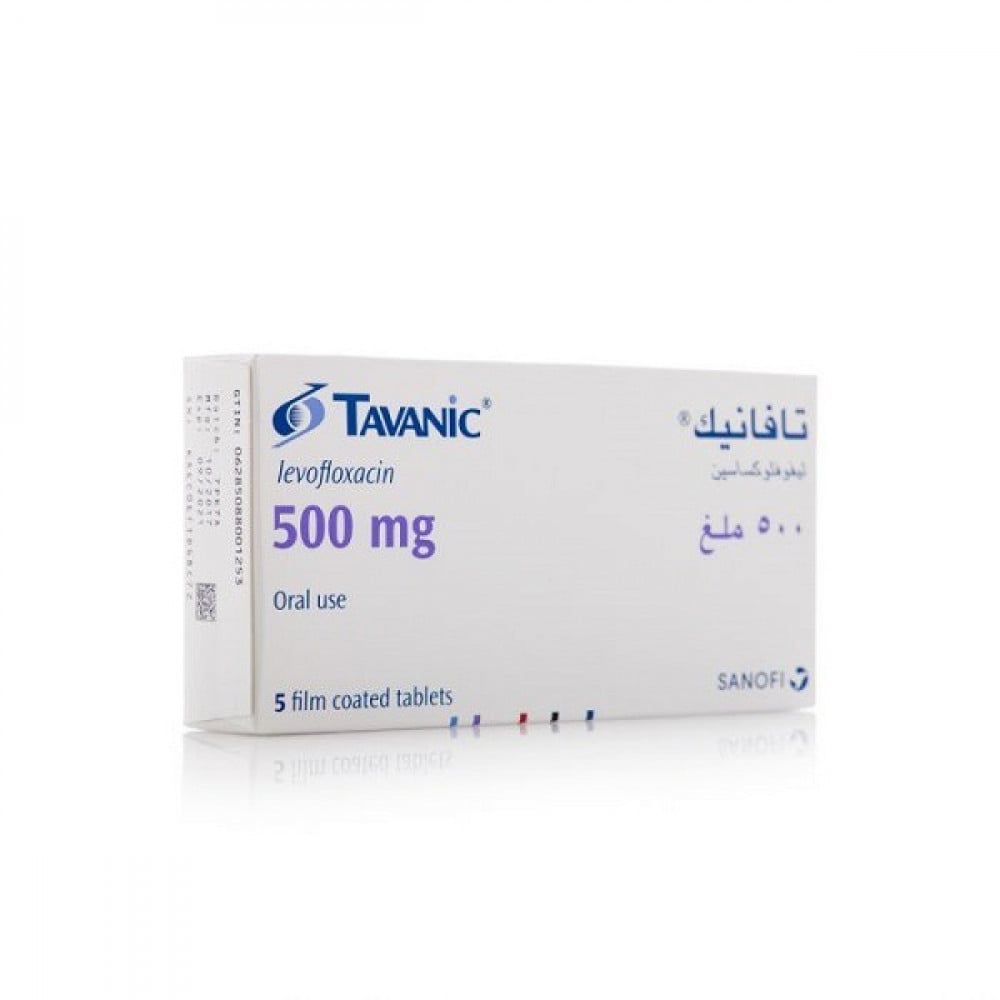
Tavanic 500mg Tab
71.30
Levofloxacin tablets 500 mg
What is Levofloxacin and what is its use
Levofloxacin is an antibiotic belonging to a class of drugs called 'fluoroquinolones'. It is used in the treatment of adult patients with bacterial infections in the following parts of the body:
• Lungs and airways
• Urinary tract (bladder and kidneys)
• Sinuses
• Prostate
• Skin
Do not take Levofloxacin if you are allergic to Levofloxacin, other quinolones, or any components of this medicine. Inform your doctor about any allergies and symptoms you have.
Warnings and precautions
• Talk to your doctor or pharmacist if you experience allergic reactions such as difficulty breathing, rash, swelling of the face or neck, low blood pressure, and dizziness.
• This medicine may increase the risk of tendinitis (inflammation of the tendons). Contact your doctor if you experience muscle or joint pain and stiffness. Be sure to inform your doctor if you are 60 years or older, or taking steroids, or have had kidney, heart, or lung transplants.
• This medicine may cause blood problems such as thrombocytopenia (low platelet count, responsible for wound healing and stopping bleeding) and other blood issues. Watch for bleeding, delayed wound healing, easy bruising, feeling tired or dizzy, fever, and pallor.
• This medicine may cause liver problems. Contact your doctor immediately if you experience side effects of liver issues such as pallor, yellowing of the eyes, white stools, dark urine, fatigue, and abdominal swelling.
• This medicine may cause confusion, anxiety, seizures, depression, and sleep difficulties after the first dose.
• Use of this medicine is associated with Clostridium difficile diarrhea (a bacterial infection in the intestines causing diarrhea). Inform your doctor if you have diarrhea.
• This medicine may cause tingling and numbness in your extremities. If this occurs, be sure to inform your doctor to prevent irreversible nerve damage.
• Be sure to inform your doctor about other medicines you are taking to prevent QT prolongation (a heart problem causing arrhythmias).
• Inform your doctor if you have low potassium levels, prolonged QT, or other heart problems.
Possible side effects of Levofloxacin
Include allergic reactions, liver problems, tendinitis (inflammation of tendons), such as muscle or joint pain and stiffness, confusion, dizziness, diarrhea, tingling and numbness in the limbs, signs of QT prolongation (such as dizziness, palpitations, weakness, and blurred vision), photosensitivity (skin reactions after sun exposure or UV rays), headache, nausea, insomnia, constipation, and dizziness.
Other medicines and Levofloxacin
Tell your doctor or pharmacist if you are taking or have recently taken or might take any of the following:
• If you are taking sucralfate or antacids containing aluminum or magnesium (used for heartburn).
• If you are taking warfarin (blood thinner).
• If you are taking anti-diabetic medicines (used to lower blood sugar).
• If you are taking didanosine (used for HIV).
• If you are taking iron supplements.
• If you are taking multivitamins containing zinc.
How to take Levofloxacin
Adults:
Hospital-acquired pneumonia: 750 mg (750 mg tablet) orally once daily for 7-14 days.
Community-acquired pneumonia: 500 mg (500 mg tablet) orally once daily for 7-14 days or 750 mg (750 mg tablet) orally once daily for 5 days.
Acute bacterial sinusitis (sinus infection): 750 mg (750 mg tablet) orally once daily for 5 days or 500 mg (500 mg tablet) orally once daily for 10-14 days.
Acute exacerbation of chronic bronchitis: 500 mg (500 mg tablet) orally once daily for 7 days.
Acute skin and soft tissue infections: 750 mg (750 mg tablet) orally once daily for 7-14 days.
Mild skin and mucous membrane infections: 500 mg (500 mg tablet) orally once daily for 7-10 days.
Chronic bacterial prostatitis: 500 mg (500 mg tablet) orally once daily for 28 days.
Acute urinary tract infection or acute pyelonephritis: 750 mg (750 mg tablet) orally once daily for 5 days or 250 mg (250 mg tablet) orally once daily for 10 days.
Uncomplicated urinary tract infections (not including kidneys): 250 mg (250 mg tablet) orally once daily for 3 days.
Post-exposure to inhalational anthrax (a serious infection caused by inhaling anthrax spores): 500 mg (500 mg tablet) orally once daily for 60 days.
Children:
This medicine is not recommended for children and is limited to inhalational anthrax; the recommended dose for this purpose is: 8 mg/kg (maximum dose: 250 mg) orally twice daily for 60 days for children aged 6 months or older weighing less than 50 kg. For children aged 6 months or older weighing more than 50 kg: follow adult dosing for this type of infection. The medicine is not used in children under 6 months.
• Take tablets with food or without.
• Take the tablet with a full glass of water.
• Take the solution orally one hour before or two hours after meals.
• Take the solution or tablet at least two hours before or after taking the following medications: didanosine (used for HIV), antacids containing aluminum or magnesium, sucralfate, iron supplements, and zinc-containing multivitamins.
• Take the medicine at the same time each day.
• Do not take more or less than prescribed.
• Do not stop the medication before the end of the prescribed period even if you start feeling better.
• Drink plenty of fluids while taking this medicine.
How to store Levofloxacin
• Store tablets and oral solution at 15 to 30 degrees Celsius.
• Keep the medicine out of reach of children and pets.
• Do not use the medicine after the expiration date printed on the package.
• Keep the medicine in its original container to protect from moisture and light.
• Do not use damaged pills.
• Do not dispose of medicines in wastewater or household waste.